Tuesday, February 7, 2023

Breastfeeding Blog: Emergency Pumping Power

A common fear for moms who rely on heavily on their breast pump is what do your do when you can't plug in your pump?  For example it seems that power outages have become increasing more common. Of course there are some great rechargeable breast pumps out there like the new Spectra Synergy Gold Rechargeable, but if you don't have a high quality rechargeable pump, you need some other way to express.

Manual expression can have a learning curve so knowing how is a great tool and the tried and true method is the Marmet Technique of manual expression.  Although I have linking it here, remember that in a power outage, you may not have access to view technique so it is good to practice before you need it.  

Did you that major breast pump brands offer conversion kits to turn your regular breast milk collection kit into a manual pump?  Spectra Manual Adapter Kit uses your current Spectra brand flange, valve and bottle to convert to an effective one-handed manual pump.  Ameda One Hand Assembly converts most Ameda breast pump kits (other than the original Mya which did not have the same shaped flange) into a manual pump.  


Other power considerations should be planned for travel such as for work or for families with babies in the NICU who spend a lot of time going to and from the hospital.  I recently spoke with a mom of a 4lb preemie whose home is an hour away from the hospital.  She was so grateful to know that there are breast pump vehicle adapters for many breast pump pump brands including the Motif Luna, Spectra S2 (which also works the Spectra Synergy Gold) and Ameda Mya Joy.


Both breast pump vehicle adapters and manual breast pumps offer you options when the unexpected comes up in your pumping journey.


Here is to being prepared!

Tanya

Thursday, January 12, 2023

Must Have Breastfeeding Products for 2023

Lactation Connection will be celebrating 30 years serving nursing mothers in 2023. It is hard to believe how time flies!  When I started this business in 1993, the only quality breast pumps were the ones you had to rent and hands-free pumping bras were non-existent!

The good news is that moms today have great choices in breastfeeding products so if you are a new mom or mom-to-be, here is a list of essentials for nursing and pumping today!

1.  High Performance Breast Pump

There are quite a few good breast pumps on the market, but the most innovative are not the wearable breast pumps.  We have seen those come and go for example a company called WhisperWear.  The reason wearable pumps don't stand the test of time is that they have to operate on regular batteries which until we get a better portable power source reduce the suction as the batteries weaken so until technology catches up, you are better off with an electric breast pump that plugs in or uses a lithium ion rechargeable battery. Breast pump vehicle adapters for your car also work well because they are using your car battery as their power source.

Our favorites are the Spectra Synergy Gold and Synergy Gold Rechargeable Breast Pump.  If you are looking for a hospital grade which means it lasts longer than one baby or need it for a corporate lactation room, the Spectra S3 Pro or the Ameda Pearl breast pump are the most cost effective durable medical equipment breast pumps.


2.  Hands Free Pumping Bra Accessory

In our multi-tasking world, hands-free pumping bras are a must have.  The best ones are not necessarily a bra and holder in one, but a hands-free bra accessory such as Simple Wishes, Motif Hands-Free Pumping Bra and Bravado Clip and Pump.  The first two go over any nursing bra that is pulled down so you can wear your favorite bra and easily put on before pumping.  The Bravado Clip and pump attaches to any one hand breast pump clip for pumping.


3.  Breast Pump Tote and Cooler Bag

While it might seem like a luxury, a breast pump tote where you can keep your pump protected and ready to travel is essential especially if it has room for or has a cooler compartment included.  You will want a cooler with hard ice so that it keeps your milks cold for 8-10 hours while you are working and traveling to and from work. We have noticed moms prefer a breast pump backpack style to allow hands free. If you already have a bag to use, make sure to get a great breastmilk cooler tote that holds up to six bottles and three hard ice packs.


4. Breast Pump Parts Air Dry Bag

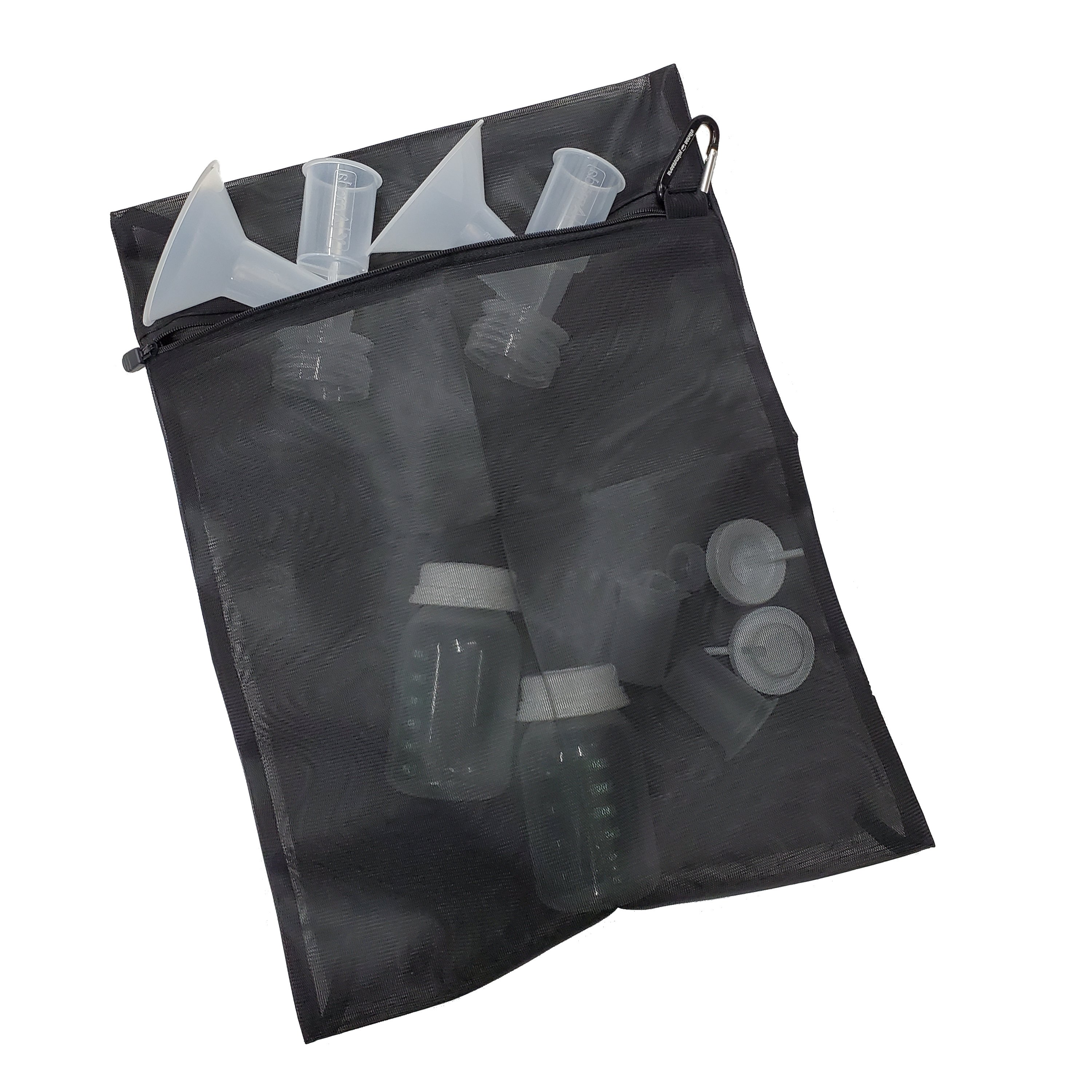
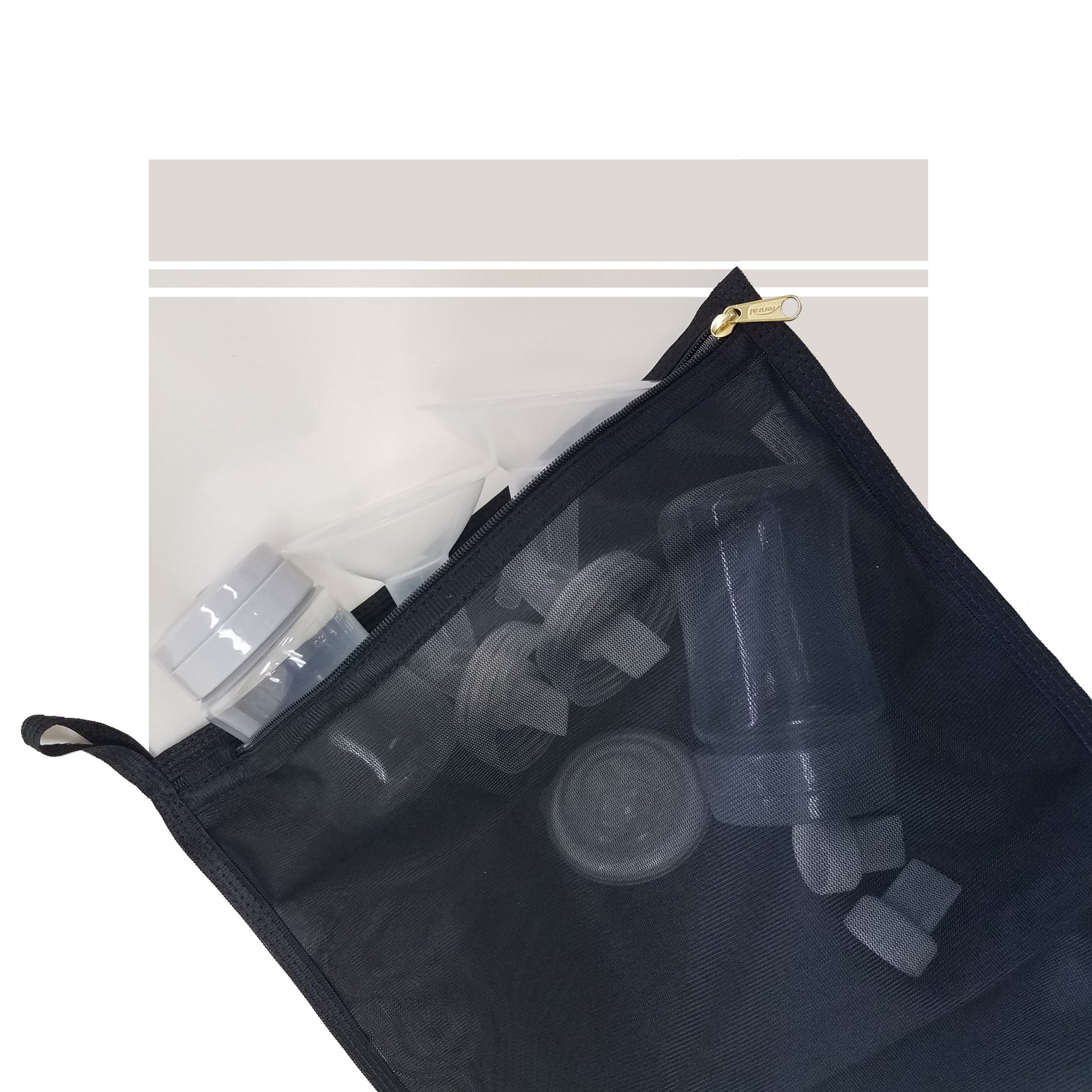
While a ziplock bag might be your first instinct, the realization that yeast grows in warm moist environments should deter you from using a ziplock bag to store and dry your breast pump parts between cleaning and use. Pumpin' Pal Air Dry Bag is a draw string bag, but we have found that moms prefer the zipper style from Breastmilk Bandit.  The Breastmilk Bandit Store and Dry Bag also includes a carabiner clip so you can hang to dry or attach to your breast pump carrying bag.


5.  Breast Milk Storage Bags

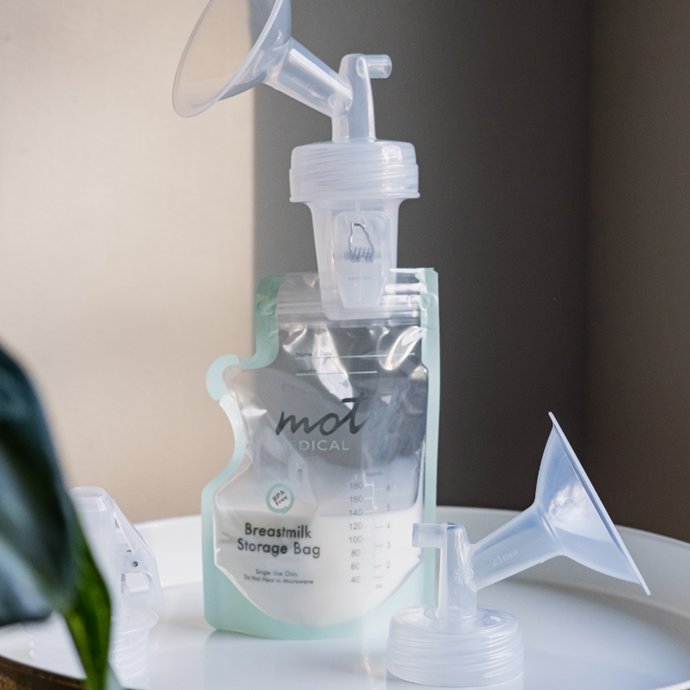
There are many styles of breast milk storage bags that get the job done.  Some of our favorites include the Motif Breast Milk Bag with pour spout and the Spectra Simple Store Bags with the ability to feed right out o the bag. Other popular bags include the Ameda Pump and Protect Bag as well as the original Spectra Breast Milk Storage Bags.


6.  Microwave Steam Sterilizer Bag

The microwave steam sterilizer bags are not only a must for those who have a microwave at work, but make sterilizing at home so much easier.  Just add water and pop in the microwave!  This eliminates the risk of  sterilizing on the stovetop and making your pump parts cloudy or worse yet forgetting about them and ending up with a melted mess.


7.  Extra Parts for your Breast Pump

Working moms love having extra breast pump parts so they can just dump them in their dry bag and sterilize everything at home.  We recommend having 6 breast shields and valve sets to make this easier.  Both valves and diaphragms aka backflow protectors need to be replaced every 6-8 weeks as older parts don't function as well and can reduce the suction thereby reduce milk supply.  Before you buy extras, make sure you have the correct breast flange size and if your pump brand does not have what you need, check out the Pumpin' Pal options.


Thursday, November 10, 2022

Using 19mm Insert in Spectra CaraCups - Extra Small Spectra CaraCup

Many moms like the hands-free options of pumping and as the best-selling brand, Spectra offers a hands-free collection kit for their pumps called the CaraCups.  

The down side is that currently only 24mm and 28mm sizes are being produced.  The good news is that there is an aftermarket insert in 19mm that allows moms with smaller nipples to take advantage of the hands-free pumping that the CaraCups provide. As you can see from the image below, the 19mm insert fits easily into the CaraCup to offer a reduced size.


You can purchase the inserts as a CaraCup 19mm bundle if you don't already have your CaraCups or you can purchase them separately if you have the 24mm CaraCup and need to go down a size.  If you are purchasing the 19mm inserts, make sure to get extra Caracup valves as moms who pump daily should replace valves every 6-8 weeks and CaraCup backflow protectors every 8-12 weeks to keep your pump kit at optimal suction level.


Best wishes for pumping freedom!

Tanya

Monday, November 7, 2022

Treating Breast Infection: Mastitis

When you have an infection after a plugged milk duct called mastitis, you often have, chills, fever, body aches i.e. flu-like symptoms. It feels like a truck ran over you.  Your doctor will most likely prescribe Cephalexin a.k.a. Keflex and dicloxacillin a.k.a. Dycill. The antibiotics, while often necessary for the infection can also make you feel tired. To help you get over mastitis quickly, make sure you are using heat, resting and emptying the breast.


Heat, Rest, Empty the Breast! 

Use a hot compress before nursing and/or pumping. An easy one to use is a disposable baby diaper. Put hot water in it and it can also be re-warmed in the microwave for several uses until it become too saturated which will feel like jelly. Disposable diapers keep their heat in much better than cloth because of the micro-beads which retain the heat.  These are similar to what is found in hot/cold compresses.


Rest as much as you can. You are sick and while you have a baby to take care of, try to stay off your feet and sleep when the baby sleeps.
Empty the breast. The affected area and breast needs extra attention. Nurse in a hold that points the baby's chin towards the plugged area. The baby's jaw and tongue will help draw out the plug. Pump after each feeding for an extra 5-7 minutes to fully empty the breast.

Taking an anti-inflammatory analgesic like ibuprofen a.k.a. Advil is good for reducing the swelling and pain management and is safe for breastfeeding due to the extremely low levels found in breastmilk.

Please ensure you watch for signs of vaginal yeast infection in you or oral thrush or diaper rash in the infant.  Visit our blog post on yeast infections for more information.

Best wishes for pain-free breasts!
Tanya

Thursday, October 27, 2022

Breast Pump Category Comparison: Personal Breast Pump, Professional Breast Pump, Hospital Grade Breast Pump

It is hard to believe it has been 80 years since Swedish engineer, Einer Egnell invented the first auto-cycling mechanical breast pump.  Today, we have so many choices, but it is a little like having more television channels - so many choices make for hard decisions.

Let's break down the categories.

Personal Breast Pumps - This category includes the small breast pumps including the silicone pumps such as the Motif Silicone Breast Pump and the Haakaa breast pump.  There used to be more single pumping battery operated pumps in this category, but none were very effective so that has mostly faded away.  I would also put the dual battery operated pumps that are hands-free in this category because since they rely on a small battery, they are only as effective as the batteries are fresh.

Professional Breast Pumps - These are pumps like the Spectra Synergy Gold, S1 and S2, Ameda Mya, and Motif Luna.  These pumps work very well, but they are not considered hygienic as multi-user breast pumps, nor do they offer longevity of use for multiple births.

Hospital Grade Breast Pumps -Typically, these were the breast pumps found in hospitals that were big and bulky weighing 9-12 lbs.  They are approved by the FDA for multi-person use when each mother has their own hygienic double collection kit.  These pumps usually offer a three year warranty and can last much longer than that.  These are also able to be serviced through the manufacturer when necessary.  The down side is that they are also costly coming in at $2000-$2600 each.

Here the the newest category, I am excited to blog about today!

Portable Hospital Grade Breast Pumps - This is an exciting new category because it was cumbersome for moms to lug traditional hospital grade breast pumps to and from the hospital for premature babies. It was also costly and while rental programs for these used to be prevalent, rentals are now few and far between.  Now a mom with a preemie or who is planning on having multiple children can own a more affordable portable hospital grade breast pump.  These breast pumps are also easier on the budget for businesses with corporate lactation rooms where space may also be limited.

Let's compare Ameda Pearl and the Spectra S3 Pro portable hospital grade breast pumps.


Both pumps sell for under $900-$999.  Both offer a lithium ion rechargeable battery as well as AC power option, a backlit nightlight, auto off, 12 suction levels and a 3 year warranty.  

The Spectra S3 Pro Breast Pump follows more of the technical specs of the professional grade category of breast pumps which are indeed high quality pumps.  These type of pumps are marketed as fast speed 70 cycles per minute and high suction up to 270mm Hg.


The Ameda Pearl follows more of the clinical data on effective pumping as you can see from the chart below.  The expression mode tops out at only 48 CPM (cycles per minute) which is highly effective for long draws of milk extraction and offers a stunningly quick stimulation mode of 80-120 CPM.  I have always respected the Ameda company for staying true to what is best for moms and not just what sells.

Spectra includes one double pumping kit with their pump and includes the hard carrying case while these are sold separately for the Ameda Pearl Breast Pump, but what the Pearl lacks in freebies, it makes up for in a high quality true hospital grade breast pump.


Expressly yours,

Tanya


Friday, October 14, 2022

Medications and Breastfeeding

It is so hard to know what to take and what not to take when you are breastfeeding.  Of course there are common over the counter drugs that are well known to be safe, but what if you have a medical condition, anxiety or depression?  Can you rely on your doctor to know which drugs pass through to human milk and which ones are safe?  

The best advise we can offer is to ask your doctor what medications he would prefer to prescribe and if there is an alternative as well.  Then before you have your RX filled, research the medications of the following websites or apps:

https://www.ncbi.nlm.nih.gov/books/NBK501922/   

The National Center for Biotechnology Information (NCBI) is part of the United States National Library of Medicine (NLM), a branch of the National Institutes of Health. The NCBI is located in Bethesda, Maryland and was founded in 1988.  

Thomas Hale, PHD wrote Medications and Mother's Milk and updates are published frequently, but the best way to keep up to date on the information in this highly valuable resource is through an app so that you receive the most current information on medications.  You can find Hale's app for Apple and Android.


https://apps.apple.com/us/app/medications-mothers-milk/id1400067173

https://play.google.com/store/apps/details?id=com.hltcorp.medsmilk&hl=en_US&gl=US

The Physicians Desk Reference if often used by doctors and it contains information on medications and nursing derived from package inserts from the pharmaceutical manufacturers. Almost across the board, they indicate that each medication should not be taken while pregnant or breastfeeding. The warning statements they use are designed to protect themselves from lawsuits. The information in the PDR is based on the manufacturer’s studies on the product, but not other studies that have been done. In general the manufacturers have done no studies on lactating women, and thus say that there is no information (even if studies have been done by others). Many doctors also have access to the USPDI (US Pharmacopeia Drug Information), which tends to have more accurate information about studies done on the drug and available information about transfer into milk than the PDR (Physican's Desk Reference). If your physician does not use LactMed or Thomas Hale's resources, make sure they are not just relying on the PDR.


LactMed and Thomas Hale are the foremost authorities on medication and mother's milk and heavily relied on by board certified lactation consultants and the lactation community at large.

If you have taken a medication that has decreased your milk supply, here are two resources that may help with galactagogues to increase your supply and protocols to replace supplements with breastmilk once your supply is on the rise.

https://www.lactationconnection.com/Lactation-Supplements-s/1854.htm 

https://lactconnect.blogspot.com/2019/02/getting-back-to-breastfeeding-pumping.html


Best wishes for the best health for you, your baby and your milk supply!

Tanya

Thursday, September 8, 2022

Working and Breastfeeding: What Supplies Do I Need to Get Started for Working and Pumping?

Moms are always asking, what supplies do I need to get off to a good start if I will be working and pumping?  I have put together a list of things that will be helpful!

For a starter kit to pump at work, you will want:

  1. Breast Pump Tote or Backpack with Cooler.  This will keep your supplies at your fingertips and make it easy for you to transport your pump and your breast milk. 

  2. Six slim Hard Ice Packs (3 to use and 3 to freeze for next time) are the best to use.  Soft bags to not stay cold as long as hard ice packs and these slim ones take up less room in your cooler that the chunky ones found at most big box stores. 

  3. Pumping Accessory Band (this goes on and off over your nursing bra so no need to change, just add this over your bra when you want to pump hands-free) Hands free pumps don't have the power that plug in pumps have. 

  4. Extra double collection kit. Having a full set of extras saves time washing and keeps you from spending extra on expedited shipping when something gets lost or damaged.  

  5. Extra valves and backflow protectors aka diaphragms to change every 6 weeks so your pump suction is maintained.                                    
  6. Time and milk fat saving bag adapter so you can pump directly into your bag. The more often you move your milk, the more fat is lost so the least number of times you transfer milk, the better. 

  7. Breast milk storage bags or extra bottles. If you are feeding directly out of the bottles, it is better to use today's milk tomorrow and leave them in the breast milk storage bottles than to freeze everything as living white blood cells are lost in the freezer. So a good rule of thumb is to use what you pumped today for tomorrow, freeze the milk from the last work day of the week and use frozen milk from the first work day. 


        8.  Another must have is a way to sterilize any essential parts at work.  Sometimes you forget to get your parts ready for the next day and of course you never know when something is going drop on the floor and you need a quick way to clean.  The best solution if you have a  microwave handy are microwave sterilizer bags.  

        9.  Our final item on this essential list is a quality air dry bag.  Do not put your parts in a ziplock bag that doesn't breathe.  You are just asking for yeast to grow on your warm moist parts if you do that. Some company make a "dry bag" but that is not the same as an air dry bag that allows air to circulate.

Best wishes for a great start to expressing liquid gold for your precious baby!
Tanya

Eufy vs Perifit Wearable Breast Pump