
Maternity Pregnancy & Breastfeeding with HealthShare Insurance

DIY Lactation Aid Feeding Tube Supplemental Nursing System

If you are looking to supplement your baby at the breast due to low milk supply or other feeding difficulty, you know that traditional SNS or Supplemental Nursing Systems are expensive and hard to clean. Moms opt for at-breast supplementation because it makes getting back to breastfeeding much more likely and suckling at the breast is optimal for the infant's tooth and jaw development.  Skin to skin feeding is also a bonding experience that should not be overlooked.   

Because of the expense of SNS systems and the efforts of leading lactation experts such as Dr Jack Newman and many lactation consultants, many moms have opted to use a DIY method using 6FR or more commonly 5FR feeding tubes.

The upside to using these feeding tubes is that it is much more cost effective as an SNS or LactAid system cost is usually $50-$75.  The down side to the DIY supplemental method is that it can be messy and you have to know what you are looking for before you buy the parts to get this done. For example, it might be tempting to think a 15" feeding tube is a good thing because there is less tubing to deal with.  This is not the right size for the correct flow of breast milk.  36" feeding tubes in 5FR accurately offer a slow flow for newborns and 36" 6FR offer a medium flow for older or babies with suck difficulties.  Choosing a shorter tube increases the flow rate so we advise against it.

That is why Lactation Connection has curated a Lactation Aid Feeding Tube Starter Set for you which includes all the parts you need at a low cost of under $20.  This product includes:

    (2) 36" feeding tubes in your choice of 5FR slow flow or 6FR medium flow. 

    (1) 50ml container with (1) storage lid and (1) tubing adapter cap which allows you to use with feeding tube for gravity or anti-gravity feeding and helps prevent spills.

    (1) 30cc syringe for flushing feeding tube for cleaning

    (1) 1" x 1.5 yard roll of clear medical transpore tape which can be torn bi-directionally. This is used to tape the         securely to the breast.
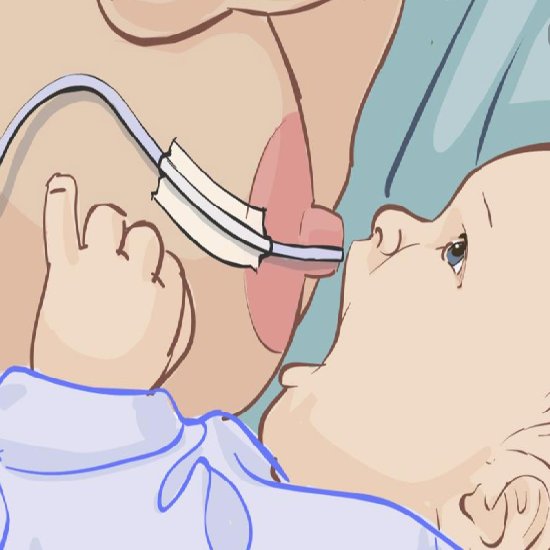


As with all lactation aid feeding tubes, these are not to be used for more than two weeks and should be replaced if milk was allowed to dry in them or if the tubing begins to feel hard.  

Best wishes for nourishing your baby at the breast, 

Tanya   

Comments

Popular posts from this blog

Spectra Breast Pump Motor Life - How many Hours Pumped on S1 S2 or S3

Have you ever wondered how many hours you have actually pumped?   Or if the breast pump you used with the last baby still has life left in it?  Spectra S Series breast pumps allow you to check how many hours you have pumped or if your pump is nearing it's 1500 hour life span.  Please note that your pump may have exceeded it's time perior warrany before it reaches it's life span. To find the number of hours you have pumped, go to your control panel on the Spectra S1 Spectra S2 breast pump or S3 Pro Hospital Grade Breast Pump and follow these steps: 1.  Press the Power On button 2.  Press the Let Down button 3.  Press the Cycle+ button 4.  Press the Vacuum- button 5.  Press the Cycle- button 6.  Press the Vacuum+ button 7.  Press the Let Down button again 8.  Read the four digit smaller numbers between the Cycle and Vacuum numbers to see the hours.      This is normally where your ...

Troubleshooting your Spectra Breast Pump: Spectra Flange Size

How do you know when you need a different breast flange size? Spectra breast pumps include the most commonly fitted flange size, 24mm breastshields . Although this is the most common size, many women will fit better in other sizes. A properly sized breast shield aka breast flange is important to ensure the best performance of your pump and the most milk output. An improperly fitted breast shield can hinder milk supply and cause discomfort. To determine the shield size you need, pump for five minutes using the standard size provided with your breast pump. Your nipple will expand while milk is being expressed, therefore it is important to measure after five minutes of pumping so that the size you select will provide adequate room. After five minutes, measure the diameter of the nipples at the base with a tape measure that uses millimeters. Click the link to access a printable tape measure . Ideally, you should select a shield size that is 2-3mm larger than this measurement, but up to...

Why Fenugreek Isn't Working for Breastfeeding

     The truth is fenugreek is a great tool to boost milk supply in most moms.  However, in the two decades that I have been helping nursing moms, I get this comment a lot, "Fenugreek didn't work for me."  How can it be that an herb with such great success stories doesn't work for a large number of mothers.  In most cases, the answer is in the quality, dosage or delivery method.      Many moms buy Fenugreek at a local health food or grocery store in brands that are not stored or bottled in the best way to keep them at full potency.  Also, shelf life factors into this so buying from a store that doesn't cater to the largest market for Fenugreek, nursing mothers, will not have the best turn-around.  It is always a good practice to check the expiration date on any herb before using.  Fenugreek capsules work best when taken in a quality brand like Nature's Herbs or Nature's Way Fenugreek and in the appropriate dosage or...