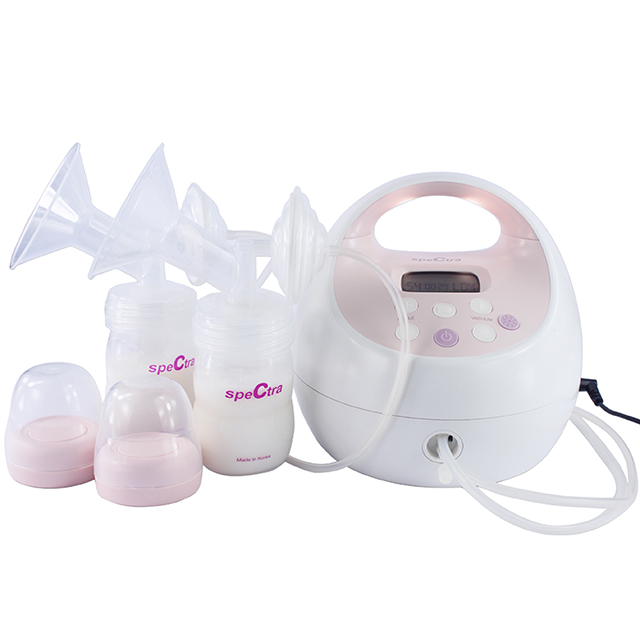
One of the most common breastfeeding questions we get is regarding a mom's breast pump. What
breast shield size will work best? Choosing the correct
breast pump flange is even more essential than choosing the correct
nursing bra size, although both are important. The figure below shows what a correct fitment inside your breast pump flange should look like.
It is imperative that there is enough room to draw the nipple into the flange so that the areola is compressed where the lactiferous sinuses are located. As you can see from the image below, the lactiferous sinuses are located about an inch behind the nipple.
This is where the majority of the milk pools before milk ejection which is why it is essential to compress the sinuses properly when pumping. If the flange is too small, the nipple is compressed and not the milk sinuses.
If the breast shield you received with your breast pump does not fit properly as in the first image, you need to seek out the correct size as soon as possible. When the nipple is drawn into the flange, there should be adequate room on one or both sides of the nipple. If not, examine your nipple at rest prior to pumping. What is the diameter of the nipple? Using an everyday object like a coin can help you determine diameter. The image below will offer coin size comparison and tips on how to measure.
But if your nipple fitment looks or feels too tight or if you can visually see that your nipple diameter is larger than a nickel, you will need to purchase a larger breast flange right away. The following manufacturer's offer custom breast pump flange sizes for your convenience:
ARDO 26 mm breast shells and 28-31 mm breast shells (AKA breast shields or breast flanges) and even an XXL ARDO 36 mm breast shell
For brands like
Medela or
Rumble Tuff, we recommend using
Pumpin' Pal Super Shields so that you get the benefit of a better fitment and can avoid back strain due to leaning forward while pumping without an angled breast shield.
What if your breast shield is too large? Some manufacturers are now offering a smaller flange such as the
Spectra 20mm breast shield. Inserts are also available from several manufacturers to make your breast flange smaller. If your nipple diameter is the size of a dime or if too much of the areola is being drawn into the breast shield, try an insert.
Ameda offers the
Ameda Flexishield which is a 21 mm massaging insert that will fit both Ameda and Medela breast shields. This silicone massaging insert which actually helps with milk let down. I have seen moms pump an extra ounce of breast milk when using a Flexishield massaging insert. This is due in part to the correct size for better milk sinus compression, but also because silicone massaging inserts like the
Ameda Flexishield massage the areola much like the peristaltic wave of the infant's tongue when the baby is at the breast. This action tends to assist the let down reflex. Other breast pump manufacturers such as
Hygeia,
Rumble Tuff,
Medela, and
Bailey can be used with the
Pumpin' Pal Small and
Pumpin' Pal X-Small Super Shields. The Pumpin' Pal small and x-small Super Shields yield some let down assistance as well due the movement of a flexible silicone breast shield.
If the manufacturer of your breast pump doesn't offer the size you need, standard
breast flange inserts are also an option.
Buying the correct size breast flange is as essential for milk supply as changing your valves, diaphragms or filters on your breast pump to maintain proper suction. In addition, if the breast flange is uncomfortable, moms tend to pump less and wean sooner. Here's to hoping this information impowers you to keep on breastfeeding and pumping!
Happy Pumping!
Tanya