Monday, February 12, 2018

Troubleshooting: When to Replace Breast Pump Parts & Accessories

If your breast pump is not suctioning the way it used to, the problem often lies in one of two breast pump parts.  Most breast pumps have a valve plus a diaphragm, filter or backflow protector.  The number one cause of low suction is a dirty, torn or worn out valve.  If you valve is the type that has a valve head and membrane shown here, it is imperative that you remove these parts when cleaning.  The valve membrane will retain a build up that decreases the suction.  Taking the membrane apart from the head is essential to remove this build-up.  If you see that the membrane will no longer close completely with the head or if it has a tear, replace it as soon as possible.


If your breast pump has a duckbill valve (shown below) which in most cases is a clear or white valve, the tip of the duckbill must be able to close completely.  If it remains open, the amount of pressure your pump can provide is decreased.  As a rule, if you are pumping three times per day or more, replace duckbill valves every six to eight weeks at minimum.  This is a small maintenance expense that will reward you in the dividend of a healthier milk supply.

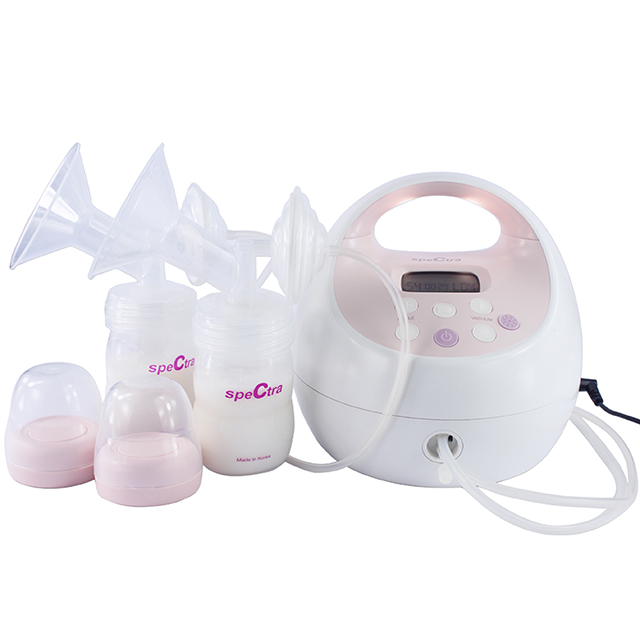
One example of essential breast pump parts that need replacement are the Spectra S2 parts that include the white duckbill valve and the backflow protector.  These two parts are the most commonly replaced parts for Spectra breast pumps and if either of these parts is used for longer that eight weeks, the amount of pressure your breast pump has can be decreased.  The longer you use a breast pump with parts that are not functioning at capacity, the greater the chance of decreasing milk supply.

The most commonly replaced parts for each brand are listed below:

Spectra - duckbill valve, backflow protector
Ameda - duckbill valve, diaphragms
Motif - duckbill valve, diaphragms 
Hygiea - duckbill valve, bacteriostatic filter
ARDO - duckbill valve, membrane pot
PJ's Limerick - micron filter, silicone gasket
Bailey Nurture III - filter

Breast pumps that do not have closed systems such as Medela do not need parts replaced as often, but open system can lead to exposure of bacteria to breast milk so we do not recommend these pumps.

Lactation Connection offers subscription services for replacement parts on our most popular brands so that you don't forget to replace them on a regular basis.  We only sell authentic manufacturers parts for Spectra, Ameda, Hygeia, ARDO, Limerick, Bailey, Rumble Tuff and BelleMa to ensure quality of performance in your breast pump.

Salud! Here is to a healthy milk supply!
Tanya


Thursday, January 4, 2018

Get Breastfeeding Help - Lactation Connection Celebrates 25 Years Serving Nursing Mothers since 1993!

Happy New Year!  Lactation Connection has been serving nursing mothers since 1993 so we are celebrating our 27th year in business in 2018.  In honor of this event, we are launching a new program to answer your breastfeeding questions.  You will be able to email me directly and have
25 years of breastfeeding experience tailored to your situation.

Just copy and paste the following into an email and fill out the information so that I can assist you
in the best way possible!

What is your baby’s birth date and birth weight?
What was your baby’s age and weight at last weigh-in?
How often (include specifics on number of times per day and how long)
are you putting the baby to the breast?
How often (include time of day and number of minutes) are you pumping?

How many wet and dirty diapers does your baby have in 24 hours?

What color are the stools?
What specific breast pump do you have?
If you are exclusively pumping, how many ounces are you getting per day?
If you are supplementing, how many ounces and at what age did you start
to supplement?
What breastfeeding concerns do you have?
Are there any health concerns with you or your baby? (ie infant tounge tie,
maternal diabetes, etc.)
Have you taken any herbal supplements or lactation cookies? If so, be specific
on brand and dosage.


Happy Nurturing!
Tanya


Saturday, December 30, 2017

Breast Flange Size - How Your Breast Pump Flange Affects Your Milk Supply

One of the most common breastfeeding questions we get is regarding a mom's breast pump.  What breast shield size will work best?  Choosing the correct breast pump flange is even more essential than choosing the correct nursing bra size, although both are important.  The figure below shows what a correct fitment inside your breast pump flange should look like.

It is imperative that there is enough room to draw the nipple into the flange so that the areola is compressed where the lactiferous sinuses are located.  As you can see from the image below, the lactiferous sinuses are located about an inch behind the nipple.  

This is where the majority of the milk pools before milk ejection which is why it is essential to compress the sinuses properly when pumping.  If the flange is too small, the nipple is compressed and not the milk sinuses.  

If the breast shield you received with your breast pump does not fit properly as in the first image, you need to seek out the correct size as soon as possible.  When the nipple is drawn into the flange, there should be adequate room on one or both sides of the nipple.  If not, examine your nipple at rest prior to pumping.  What is the diameter of the nipple?  Using an everyday object like a coin can help you determine diameter.  The image below will offer coin size comparison and tips on how to measure.

If you nipple is the size of a penny or even a nickel, the standard breast shield size that came with your electric breast pump may work for you.  This is because some of the brands offer a slightly larger flange than the most common breast shield size that were included with your Medela or  Spectra breast pumps which is a 24mm breast shield. For example, most Ameda breast pumps include an Ameda 25 mm breast pump flange. Hygeia breast pumps include a Hygeia 27 mm breast pump flange.  ARDO includes a 26mm flange.

But if your nipple fitment looks or feels too tight or if you can visually see that your nipple diameter is larger than a nickel, you will need to purchase a larger breast flange right away.  The following manufacturer's offer custom breast pump flange sizes for your convenience:

Ameda Custom Fit Breast Flanges replace ones in the Hygeinikit, Purely Yours, Ultra, Finesse and Ameda Mya Joy breast pumps have 28.5mm flanges and 30.5mm flanges available as well as 32.5 and 36 mm.
Ameda also offers a 21mm breast flange for Ameda Mya  and Ameda Mya Pro (does not fit Mya Joy),  24mm and 28mm Ameda Mya flanges as well as a 30mm flange.


ARDO 26 mm breast shells and 28-31 mm breast shells (AKA breast shields or breast flanges) and even an XXL ARDO 36 mm breast shell

For brands like Medela or Rumble Tuff, we recommend using Pumpin' Pal Super Shields so that you get the benefit of a better fitment and can avoid back strain due to leaning forward while pumping without an angled breast shield.

What if your breast shield is too large?  Some manufacturers are now offering a smaller flange such as the Spectra 20mm breast shield.  Inserts are also available from several manufacturers to make your breast flange smaller.  If your nipple diameter is the size of a dime or if too much of the areola is being drawn into the breast shield, try an insert.  Ameda offers the Ameda Flexishield which is a 21 mm massaging insert that will fit both Ameda and Medela breast shields.   This silicone massaging insert which actually helps with milk let down. I have seen moms pump an extra ounce of breast milk when using a Flexishield massaging insert.  This is due in part to the correct size for better milk sinus compression, but also because silicone massaging inserts like the Ameda Flexishield massage the areola much like the peristaltic wave of the infant's tongue when the baby is at the breast.  This action tends to assist the let down reflex.  Other breast pump manufacturers such as Hygeia, Rumble Tuff, Medela, and Bailey can be used with the Pumpin' Pal Small and Pumpin' Pal X-Small Super Shields.  The Pumpin' Pal small and x-small Super Shields yield some let down assistance as well due the movement of a flexible silicone breast shield.  

If the manufacturer of your breast pump doesn't offer the size you need, standard breast flange inserts are also an option.

Buying the correct size breast flange is as essential for milk supply as changing your valves, diaphragms or filters on your breast pump to maintain proper suction.  In addition, if the breast flange is uncomfortable, moms tend to pump less and wean sooner.  Here's to hoping this information impowers you to keep on breastfeeding and pumping!

Happy Pumping!
Tanya

Tuesday, June 6, 2017

If your Breast Flange Size Reducing Your Milk Supply?

If you have the wrong breast flange size, it can greatly reduce your output when your are pumping and decreasing the amount of milk extracted signals your body to produce less milk!
There are a lot of things you can save money on when you are breastfeeding, but getting the right size flanges and replacing essentials like valve and filters is not the place to scrimp as both those things can greatly reduce your milk supply.  I have created an image to help you determine your nipple size.  Use this as a guide to buying the correct breast flange size no matter what brand you have.  Some brands don't have a full range of sizes, which is why Pumpin' Pal is perfect!  Not only do their Super Shields help you lean back and save your back while you are pumping, their breast flanges now come in sizes from x-small 15mm to x-large that fit up to 40mm nipple diameter.  Remember the nipple diameter does not include the areola, just the nipple itself and it is easy to see when you have just finished nursing or pumping.

To find larger or smaller breast shields from Ameda, Spectra, Hygeia and ARDO, shop http://www.lactationconnection.com  


Here's is to happy pumping and more milk!
Tanya

Tuesday, January 24, 2017

Breastfeeding: Benefits of Nipple Cream

There are many things sold out there that you do not need for breastfeeding.  One example are hot compresses.  They can be expensive upwards of $20 for an item you use temporarily.  My suggestion for this is a disposable baby diaper.  It is imperative to soften breasts that are engorged before feeding or pumping with warm compresses, but a baby diaper run under hot water can be very effective and costs about .50 cents each.

And while some moms only need expressed breast milk to soothe their breast, having a good nipple cream around can be a lifesaver.  I recommend purchasing a quality nipple cream prior to delivery. That way, you aren't sending your hubby to the grocery store in the middle of the night and he comes home with something with pesticides or other substances that can be harmful to the baby and not
helpful to you.

While HPA Lanolin has been the go-to nipple cream in the past, many companies such as Ameda have discontinued carrying this product.  Today moms prefer an all-natural approach.  While there are several all natural nipple creams out there, moms prefer the soothing of coconut oil.  Coconut oil not only soothes and hydrates nipples, it offers anti-microbial and anti-fungal properties that most nipple creams do not.

So what are the benefits of breast milk and nipple cream besides a soothing feel and hydration? According to research sited below, there is evidence that the presence of ‘epidermal growth factor’ in breast milk has potential therapeutic benefit in promoting the growth and repair of skin cells. Moist wound healing results in wounds healing 50% faster when the internal moisture of the skin is maintained.  So, save your money and don't buy a commercial breast compress; but instead put a moist wound healing all natural breast cream like cocout oil on your shopping list for baby!


Happy Breastfeeding!
Tanya

References:
Mohrbacher and Stock (1997)
Renfrew, Woolridge and Ross McGill (2000)

Monday, October 24, 2016

Breastfeeding: Guide to Preparing for Breastfeeding

I have been asked to speak at an event at a Motherhood Maternity store in the next few weeks.  The topic, Preparing to Breastfeed.  There are many misconceptions about getting ready to breastfeed, but much of your success is about education.  You as a reader of this blog, are doing just that.  Getting a head start by getting information prior to delivery.  Knowing what is normal, what to expect and when to get help is essential.

Know Your Body

Watch for indicators that your body is getting ready to produce milk.  The most common is breast tissue growth.  Your breast should change and get larger before delivery.  You may or may not leak colostrum in the last trimester, but you should have some breast size change during the pregnancy.  

Check for flat or inverted nipples.  This is not a simple, look in the mirror exam.  You will need to put pressure with your thumb and index finger approximately 1" onto the areola (figure A) to see if your nipple protrudes or instead goes flat or hides when the areola is compressed (figure B).  


If you do find you have flat or inverted nipples, there are steps you can take.  If you are not at risk for pre-term labor, a nipple everter such as the Avent Niplette is a good option.  If you are high risk, then you will want to make sure you have a breast pump available for immediate use.  If you are waiting on an insurance pump, then purchase an inexpensive quality manual breast pump like the Ardo Amaryll.  This pump is a great value and can be used to evert the nipple prior to latch on by pumping for a few minutes before breastfeeding.  


Get Comfortable with Your Breasts

Common mistakes that moms make can lead to sore nipples so it is wise to know how to hold and support the breasts during feeding.  The C Hold is most commonly taught today, but many moms don't realize that the bottom half of the C is as important as the top.  Not only make sure that the thumb is not impeding the baby's latch on the areola, but make sure that the fingers underneath are not in the way as well.  It is very common for moms to have their fingers in the way so even when the baby wants to do a deep latch, they can only get so close due to the obstructive digits.   The image below shows the correct hold when latching the baby.


Don't Fall into Booby Traps

If you are getting advice such as you need to toughen up your nipples before breastfeeding, you need to think twice.  Much of the advice you get is anecdotal and not research based and some advice is simply just rooted in old wives tales.  Make sure the sources you are listening too are indeed breastfeeding experts.  (In the case of this blog, it is written by a retired international board certified lactation consultant with three children, two grandchildren and 23 years of experience in helping mothers meet their breastfeeding goals.)  Back to the case in point, nipples do not need to be toughened.  Rubbing nipples to prepare them for breastfeeding only breaks down natural keratin layer which makes you more prone to trauma.  The remedy, a good latch.     


Breastfeeding Education

The best way to prepare for breastfeeding is education so take a breastfeeding class at your local hospital, read a quality breastfeeding book not just a section of a book written for pregnancy.  I highly recommend The Nursing Mother's Companion by Kathleen Huggins.  If you are in a rural area and don't have access to classes, you can use youtube but make sure the instructor is qualified before you watch.  

Resources

Know where to get help before you need it.  Feel free to email me with questions, but finding out if there is a La Leche League group or a local lactation consultant that hosts a Latch Clinic is a great help.  You may even have an IBCLC who does home visits in your area.  This is information you want to have before you need it!

While you are preparing your home for your baby, make sure you have prepared with information, resources and education.  A few supplies can go along way to make things easier as well.  I recommend a nursing nightgown or nursing pajamas with integrated sleep bra that offers easy access but holds you nursing pads in place, a quality double electric breast pump with a closed system to prevent contamination and cotton breathable washable nursing pads.  Bottles are not recommended until the baby learns to breastfeed well which is usually after 6-8 weeks so if you are pumping for storage, add some breast milk storage bags to your shopping list.  And finally a nursing bra that fits multiple cup sizes like the Bravado BodySilk Nursing Bra or a less expensive alternative is the Amamante Caress & Contour Nursing Bra.  

Happy Nesting!
Tanya


Monday, October 17, 2016

Troubleshooting your Hygeia Breast Pump: When to Replace Hygeia Parts

If you are new to pumping, you want to know what to do about maintaining your new breast pump.   All breast pumps need to be maintained to function at optimal levels and Hygeia breast pumps are no different.


Getting Started

When you get your pump, remove the breast shield from the Hygeia tubing.  Then remove the valve from the breast shield.  Sterilize only the following parts:  breast shield, valve, bottle, bottle ring, disc and cap.  Do not sterilize the filter or tubing.  Sterilize using the top rack of the dishwasher, microwave steam sterilizer bag or boiling water.  If you use boiling water, bring the water to a boil and then leave in for no longer than 3-5 minutes or you will have cloudy or warped parts.  Do not use a bottle brush to clean breast pump parts.  Do not wash Hygeia filters.  Keeping the filters dry, helps maintain their integrity longer.

Re-assemble as per instructions.  If you has misplaced your instructions, you can download these Hygeia EnJoye breast pump instructions.  But remember, although these breast pumps have a closed system and when you purchase your own kit, you should not share these types of breast pumps with other mothers.  Although there is no cross contamination of yeast with a used breast pump, the motor is made to last for one baby and older pumps may compromise your milk supply.

Now that you have your breast pump re-assembled, set your pump to a fast speed and the highest suction level where you feel comfortable.  Too high of suction will not help the milk let-down if you feel discomfort.  Quick speed gives you the most cycles per minute which helps with milk production and double pumping increases prolactin levels which help with milk supply.  For a single baby pump for a full 10-15 minutes of double pumping even if milk stops flowing earlier.  This tells your body you want to produce more milk.  

Troubleshooting:  Replacing Breast Pump Parts

The most common problem with low suction on your breast pump is the result of a part in your kit. To keep your pump functioning at optimum levels, replace the Hygeia valve and Hygeia Bacteriostatic Filter parts every 100 pumping sessions.  For a mother who works 5 days a week and pumps 3 times per day, that is every 7 weeks.  The rule of thumb for the working mother is to replace these parts every 6-8 weeks. Other parts should be replaced as needed.  If you see pinholes in tubing, warped or scratched breast shields it is time to replace parts.  Other indicators are if you had a yeast infection as boiling will not kill yeast or if you see a tear in your valve.

It is important to keep replacement parts on hand so that a misfortune with a broken, melted or loss part does not interfere with your milk supply.  Having extra breast shields aka breast flanges are also a good way to keep from spending as much time cleaning your parts.  Before you purchase extras however, make sure that the standard size is comfortable.  You should have space on at least one side of the pump shaft for your nipple to move freely while pumping.  If there is no space or you feel discomfort, consider purchasing the next size breast flange.  

Maintaining your breast pump is a proactive way to keep your milk supply, but don't forget to pump frequently and don't miss feeding sessions without pumping.  For moms with babies under 6 months, that is 8 times per day of feeding or pumping and over 6 months, you need stimulation 5 times per day.  Ensure an extra 3 pumping sessions during growth spurts which occur at 3 weeks, 6 weeks, 3 months and 6 months.  These extra sessions are a good reminder to replace your pump parts and step up your number of pumping sessions for the full 5-7 day growth spurt period.

Happy Pumping!


Tanya

Eufy vs Perifit Wearable Breast Pump