Wednesday, July 20, 2022

Breastfeeding Tips and Techniques

Hi Mamas!

I entitled this blog post tips and techniques instead of tips and tricks or breastfeeding hacks because this information was born from 30 years experience in breastfeeding, lactation education and lactation consulting.

So let's get started!

Alternate Breast Massage

This technique is the practice of massaging the breast from the chest wall towards the infant's mouth every time there is a pause in swallowing.  Benefits include keeping the baby alert to allow for faster and more efficient milk transfer as well as more fat content in the milk promoting health weight gain.


Breast Support

Breast support refers to the practice of holding the breast during the feeding.  Typical holds include the C-hold in which the mother cups the breast with her hands in the shape of a C.  It is important that her fingers both above and below the breast are well off the areola so that the infant can achieve a deep latch.  Supporting the breast during the entire feeding helps keeps the infant on task and reduces slipping down into an improper painful latch position.  The infant can feed more efficiently without the burden of supporting the breast which is especially important for younger infants that cannot  yet support the weight of their own head.


Proper Latch

A proper latch also know as a deep latch as opposed to a shallow one is one in which the infant is able to grasp at least 1" of the areola.  The infant's tongue should be down= with lips in a rosebud shape and not tucked under.  A clicking sound should not be heard which may indicate tongue is up.  Mothers should take care to check the underside and can help the infant flare the lips by pulling down gently on the infant's chin.  The benefits of a proper latch include efficient milk transfer and elimination of pain for the mother, as well as reduction of gas in infant as a proper latch reduces swallowing air while feeding.


More tips to come!
Tanya

Friday, December 10, 2021

Insurance Pump Comparison: Choosing the Right Breast Pump

Whether you are choosing a breast pump through your insurance company or to purchase on your own, information is always welcome!  Choosing the right breast pump is so important because it can make the difference in how long you are able to or even choose to pump milk for your breastfed baby.  

Below is a comparison chart to help you with your selection.


As someone who has been in this industry since 1993, we have seen breast pumps and even breast pump companies come and go, but Spectra and Motif seem to be taking the lead.  Both companies have easy access to replacement parts including multiple breast flange sizes.  Both companies also offer compatible breast pump bottles and high quality breast milk storage bags as well.  Spectra also offers a multi-user breast pump for corporate lactation and birthing centers called the Spectra S3 Pro for under $900 which is much better than over a thousand for what was the previously only option in hospital grade breast pumps from Ameda and Medela.  Spectra also offer the only dual control breast pump (not compared above) called the Spectra Synergy Gold Breast Pump which has all the benefits of the Spectra S2 plus independent controls for each breast so you can help coax the lazy breast to increase output more easily. Now Spectra also offer the Spectra Synergy Gold Portable Breast Pump with rechargeable battery for extra convenience!

Due to the difficulty in getting breast pump parts, we do not currently recommend Evenflo, Hygeia or ARDO as your first choice. Due to the inferior motor and systems, we also do not recommend most Medela pumps. For a high quality breast pump with the strength of a good motor and easily obtainable parts, our top recommendations are the Motif Luna, Spectra S1, S2 and SG (Synergy Gold) for professional grade breast pumps and Spectra S3 Pro for Hospital Grade multi-user needs.  Check with your insurance company to get more information on how to obtain your breast pump and bookmark Lactation Connection for your breast pump parts needs as essential parts such as valves and backflow protectors as essential in the suction of your breast pump and must be replaced every 6-8 weeks for optimal performance.

Here's to making good choices!

Tanya


Wednesday, October 27, 2021

16mm 17mm and 19mm Small Breast Shield Size: What To Do When the Smallest Breast Flange is Still too Big!

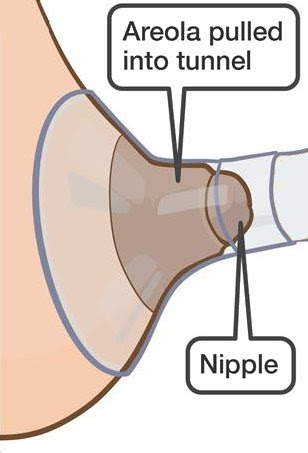
Recently, several moms have contacted us regarding the smallest flange a manufacturer makes still being too big.  Moms are reporting that too much of the areola is being pulled into the tunnel of the breast flange and they are not emptying their breast well when pumping.  


From what I have seen in my twenty-eight years experience in the lactation field, this problem is occurring more and more today than it did in the past.  

One explanation is that there is currently a culture of over-hydrating.  

How can water be bad?  

Of course water is a good thing, but hyperhydration causes lower milk supply by causing the body to excrete more fluids rather than making more milk and it actually changes your skin turgor aka elasticity. This is why these recommendations can help you when the smallest breast flange is still too big.

  1. Reducing water intake to normal “drink to thirst” levels rather than over hydrating with a large number of ounces per day can help reduce the elasticity in your nipples.
  2. Do not use lubricants aka nipple cream or pumping spray on your breast while you are pumping if too much of the areola is being drawn in. While these are normally helpful products, they may cause too much of the areola to be drawn in if your breast flange is too big.
  3. Re-position the breast shield every 3-5 minutes to be slightly off-center.  This will engage more of your milk ducts to help you drain your milk sinuses more effectively.


What do I watch for when reducing my hyperhydration habits?

    1.  Check your urine color. It will be darker than pre-pregnancy even with normal hydration because of the proteins excreted during lactation but if it gets too dark, you are reducing too much.
    2.  Drink to thirst.  You should not be going around why dry mouth or lips.  If you are thirsty, drink water!
    3.  Your skin turgor should return to normal after 3-5 days of changing your drinking habits.  If this does not help your flange fit better, you may need to go with an aftermarket brand that will fit you better.

How do I find a flange that fits me if my pump manufacturer doesn't make one?

If you have a Medela, Hygeia or Lansinoh Breast Pump, Pumpin' Pal offers an x-small silicone flange which fits 15mm 16mm nipple 17mm and 19mm nipple.


If you have a Spectra breast pump, Ameda Mya breast pump  (not Mya Joy) or Motif Luna breast pump, Pumpin' Pal offers an x-small silicone flange with connector for Spectra, Ameda and Motif.  Pumpin' Pal fits nipple sizes 15mm 16mm 17mm and 19mm and works with those pumps perfectly with the Pumpin' Pal Spectra adapter which also works with Ameda Mya and Motif Luna.  


If you have an Ameda pump such as the Platinum, Elite, Purely Yours, Finesse, or Mya JOY that uses the Ameda Hygieinkit  and the 21mm Ameda Flexishield is still too big, you may have felt like you were out of luck.  You can now use the Pumpin' Pal X-Small Flange and other Pumpin' Pal sizes with an Ameda connector for the Ameda breast pumps that use the Ameda Hygienikit.  The Ameda Hygeinikit connector is unique shape that fits the Ameda diaphragm so if your Ameda flange does not have this diaphragm chamber, this is not going to work with your Ameda pump.  In that case, you probably have the Ameda Mya instead of the Mya Joy and you need the connector Mya Adapter.
Otherwise the Pumpin' Pal X-Small with Ameda adapter may be right for you. 


We love to recommend Pumpin' Pal because their flanges have helped so many moms over the years.  So much so, that they were referred to as "supershields", but as with any product not every mother has the same experience.  To get the most out of your silicone supershields, read the Pumpin' Pal Start Guide so that they adhere to your breast for best performance.

So, how should your breast flange fit?

  1. It should be loose enough that the nipple moves back and forth without pain.
  2. It should be tight enough that not much if any of the areola is drawn into the tunnel.
  3. You should not experience redness or discoloration after of the nipple and areola after pumping.
  4. You should not experience blanching (area turning white) where the flange touches.
Another sign that your breast flange aka breast shield is not fitting properly is if you breast do not feel emptied after pumping.  Please note that breast may not feel empty 3-7 days after delivery due to an engorgement period when the breast feel full due to swollen tissue.

Best wishes for a good fit!
Tanya

Thursday, September 16, 2021

Dad's Guide to Bottle-feeding Breastmilk

As our world has changed over the last two years with more parents are working from home and sharing the responsibility of feeding the baby.  My own son is expecting his first and his wife will be working outside the home while he runs his business from home.  

Since babies don't come with an instruction manual, Dads and other caregivers can benefit from some advice on feeding while mom is away.

#1.  Introduce the Bottle at 6-8 Weeks

This time frame is optimal because it allows enough time for mom and baby to establish a good latch and breastfeeding rhythm.  Waiting longer than 6-8 weeks can sometimes make it more difficult for baby to want to transition from breast to bottle.  The goal is to use this window of opportunity so that baby goes back and forth from breast to bottle seamlessly.  

#2.  Choose the Bottle with Intention

The intention behind choosing a bottle is that the nipple had a wide mound so that baby opens wide simulating the same latch as they would on the breast.  The bottle nipple should be silicone and not rubber that has a smell and taste and should be a slow flow or newborn nipple.  Some recommended bottles and nipples are Spectra, Motif Luna, Hygeia and Comotomo.  

#3.  Schedule an Introductory Trial Run

It may be difficult for Dad or any caregiver to try to introduce a bottle with mom is nearby.  Plan a time that mom has a short outing and when it has only been 2 hours since the baby has fed.  Waiting until the three hour mark increases the infant's agitation and willingness to try a new way of feeding.

#4.  Position Baby

Make sure the baby's head is above their body.  Most images you see of bottle feeding have baby in a cradle hold with the bottle above them which can be effective.  When using a cradle hold, the crook of your elbow is lifted so you may want an extra pillow on the armrest so your arm doesn't get fatigued in that position.  If the infant is refusing the bottle in this position, there are several other positions to try.  One is to simulate the position at the breast, hold baby tummy to tummy with you and hold the base of the bottle close to your chest.

#5.  Take it Slow

It is important to slow down the feedings as bottles drip automatically and can cause the infant to feed too quickly getting more air and taking in more breastmilk than mom is producing.  One way to slow the feeding is to stop and burp after each ounce.  

It is important not to offer baby more than the appropriate amount for weight gain or you may undermine moms confidence in her milk production.  So the next question is, how much does the baby need?  To calculate the infant's need, take the baby's weight and multiply by 2.5 which will give you the number of ounces per day. Divide this number by the number or feeding per day which is normally eight.  This will give you the number of ounces per bottle.  But who has time to do math with a new baby in the house so below is a handy chart for you to use.

Once the baby gets used to the bottle, it can be daunting if they finish quickly and still act as if they are hungry.  It is evident a baby over 6 days of age is getting enough by the wet diapers which should be 6-8 per day.  The number of dirty diaper can vary but generally 3-4 per day up to 3 months and then can slow down to one every three to five days. It is also important to know that an infant going through a growth spurt which is typically 3 weeks, 6 weeks, 3 months and 6 months will act hungry and mom may need to increase her pumping schedule for 5 days in a row to boost her supply to match the baby's demand.

#6.  Know How to Handle Breastmilk

As anytime you feed an infant, you will want to wash your hands.  But there is much more to know about how to handle breastmilk when it comes to storage, thawing and feeding.  

Breastmilk is good at room temperature for 4 hours, but if the baby pauses a feeding it needs to be used within a 2 hour window.  It is good in the refrigerator for 4 days, but you should then use it and not freeze it as you have used up the life of the milk.  It is good in a freezer for 6-12 months but you should not store it in the door and you should never re-freeze thawed breastmilk.

When thawing breastmilk, it is best to do this in the refrigerator overnight, on the counter for three hours or in a container of warm, not boiling hot water.  You can also use a commercial bottle warmer provided it has a thermostat reading as breast milk is best served between 77 degrees and 98.6 degrees Fahrenheit for optimal digestion. If you are thawing breastmilk, use the oldest milk first.

Use fresh milk whenever available.  While it seem reasonable for mom to pump and stockpile her freezer, using frozen stock on the first workday of the week is good, but the rest of the week use Monday's expressed milk to serve on Tuesday, etc.  The reasoning behind this is that freshly expressed breastmilk has living white blood cells in it that are no longer living when frozen. Don't get me wrong, frozen milk is still far superior in nutrition and antibodies than artificial infant milk, but the fresh milk is optimal in those while blood cells providing greater active immunities for your baby.  In addition, breastmilk changes over the months so that as the baby grows and the needs of the baby grow, the milk expressed at that time is age appropriate in it's benefits as shown on the infographic below.


#7 Encourage Mom

Expressing breastmilk for baby takes time and commitment.  Remind mom that she is leaving her baby a gift every time she leaves breastmilk for a feeding.  Breastmilk is liquid gold and liquid love for her baby and this provision can help mom in the transition from being home to being away from her precious infant. Another bit of encouragement and boost to milk supply is to pack her bag with a water bottle, nutritious snack or lactation cookie bar. And of course a nice note in her pump bag every now and then never hurts!


Best wishes for Bottle Feeding Breastmilk!

Tanya


P.S.  Feel free to leave questions!


Monday, August 30, 2021

Which Bottle Nipples are Best for Breastfeeding?

Recently a question came in from an expectant mama as to whether the Avent bottles were best for breastfeeding.      

In years past, I recommended Avent bottles more often than not.  Today, with design changes to Avent and other great choices on the market, I thought I would help this mother and others with information on choosing the right bottle for your baby with today's blog.

Nipple Confusion and Flow Preference

First, let me say that introducing a bottle before six weeks can be problematic.  It is essential that your baby learn to latch well and nurse from the breast frequently during not only the learning period but also during the three week and six week growth spurt phase so that mom's milk supply can be stimulated by the increased suckling during those time periods.  Infant's nurse differently from a bottle which is why the term nipple confusion is prevalent.  When nursing from the breast, the baby uses a wave motion to draw the nipple into the mouth, but when using a bottle the baby traps the bottle nipple in the roof of the mouth or thrusts the tonged toward the bottle nipple opening to control the overwhelming flow from the bottle. In addition, feeding from a bottle gives the infant immediate gratification whereas the infant must suck for approximately 30-60 seconds from the breast to achieve let-down. As human beings, we tend to prefer immediate gratification even thought this is not best for the infant.  Suckling at the breast aids in tooth and jaw development in addition to many other benefits. If there is a medical need to supplement prior to the six week mark, a feeding syringe is best to avoid preference of a faster flow.  See our blog post on syringe feeding.


Introducing a Bottle

Once the infant has passed the six week growth spurt and you are ready to introduce a bottle, the type of bottle nipple used can make for a smoother transition from breast to bottle and vice versa.  I always recommend silicone slow flow nipples with a large area for the baby to latch.  See image below for an example of this type of bottle nipple.  

Shallow or narrow nipples do not allow for the infant to flare out or rosebud their lips like they do on the breast. Or at least not onto a soft are but only only onto hard plastic.  This shallow nipple discourages infants to take enough of the nipple into their mouths.  This behavior can transfer to breastfeeding causing the infant to only take moms nipple and not at least the recommended inch of the areola into their mouth.  If this shallow latch happens on the breast, it causes nipple pain in mom and poor milk transfer for the infant.  The milk transfer is not well achieved unless the infant latches onto the areola where the breastmilk pools in the milk sinuses.  Pacifiers with this breast-like shape are also recommended such as the Ninni Co Pacifier.

Below are some links to bottles and nipples that meet the criteria for the infant to latch well onto the bottle and back onto the breast:

Spectra Bottles with Nipples

Motif Luna Bottles and Motif Luna Nipples

Many experts believe that in addition to a wider base, a graduated sloped shape is recommended such as the Evenflo Balance Nipples as optimal for infants.  


Nipple Flow

In addition, breast fed babies feed more efficiently due to their increase in jaw development so there is no need for a higher volume flow when purchasing nipples.  You only need to purchase slow flow or newborn nipples in most cases unless your baby has suck difficulty or tongue tie, etc.  Bottle companies often put an age range on nipples to encourage moms to purchase more from the company, but you only need to replace nipples when they yellow or if they drip too quickly. If you baby needs an even slower flow, the Pigeon Super Slow Flow can be very beneficial and it is compatible with Spectra, Motif and Lansinoh wide-mouth bottles as well as the Evenflo Balance + GLASS bottle.

Pigeon Nipples


Best wishes as you prepare for baby!

Tanya


Friday, April 16, 2021

Back to Breastfeeding: Transitioning from Bottle to Breast


Recently, we had a question from a mother whose baby was unable to nurse from the breast effectively because of a severe tongue tie.  From experience, we know she is not the only mom with questions about how to get a baby who has been bottle-fed for weeks back on the breast so our hope is that this blog post helps Bev and the other moms in her situation.

There are several things you can do to encourage an infant who is bottle feeding to take the breast.  One size never fits all in counseling nursing mothers, so we will outline a myriad of techniques so that you can find one the one that helps you the most.

Start by changing the way you supplement.  The best method is to go from a bottle to finger feeding with a syringe.  A 10cc syringe is 1/3 of an ounce.  This will help you determine how many times to fill the syringe for a feeding.  When finger feeding with a syringe, put your feet up on a stool and lay the baby on your lap facing you.  Then insert a clean finger, pad side up.  Once the baby begins suckling, place the syringe in the corner of their mouth and wait for 30-60 seconds before tapping the baby feeding syringe.  Syringe feeding will help the baby use his tongue properly instead of arching or thrusting his tongue as when bottle feeding.  This method also slows down the feeding unlike a dripping bottle so that there is not immediate gratification but instead proper suckling several times, then yields the result of you tapping the syringe and releasing the milk.  This is important because it takes 30-60 seconds for breast milk to be released.  


Change the way you bottle feed.  If syringe feeding is not feasible, especially if your infant is in child care while you work, you can change the way that bottle feeding is done so that it can help as well. Holding a bottle fed baby the same way as you would feed a nursing infant can help transition the baby from bottle to breast. This means the baby should be tummy to tummy with you while feeding from a bottle.  Hold the bottle close to your collar bone so that the infant is not on its back when feeding.  Make sure the infant has lips wide apart.  If clamping the tip of the bottle nipple, gently screw the bottle in like a lightbulb and it will help the infant rosebud their lips.  If an infant does not open wide on the bottle, they will not open wide at the breast and milk transfer will be inefficient.  The milk sinuses are located about an inch behind the nipple so a wide mouth is essential in breastfeeding effectively.

Take advantage of prime time opportunities.  There are several times when infants are more disposed to breastfeeding.  These are times when their natural instincts kick in.  These times include falling asleep, not yet fully awake and when mom and baby are in a warm bathtub together.  Have a syringe full of breastmilk available when taking advantage of these prime time opportunities and that way you can drip breast milk on your nipple (you can also hand express first instead).  Lay the sleepy or bathing infant at your breast with your nipple exposed and gently guide them to nurse.

Try a nipple shield.  A baby who is used to the feel of a silicone nipple in their mouth may not respond to a bare nipple.  A nipple shield is one way to transition.  Make sure that you change your bottle feeding position from baby on their back to tummy to tummy for at least 2-3 days prior to trying the nipple shield.  Wet the nipple shield to help it adhere.  Massage your breast so that milk begins to drip into the nipple shield before attempting to latch.  Please note that if you are using a nipple shield for more than a few days, you will need to use a breast pump 1-2 times per day since it is a physical barrier that can lower milk supply without the added stimulation of pumping.

If your milk supply is low, use a lactation aid feeding tube.  If you are getting your baby latched, but they keep disengaging because milk is not flowing, a lactation aid feeding tube which can draw from a syringe or a bottle for supplement can help keep the baby at the breast.

Remember, your baby prefers you!  It is often such a blow to our ego as a mom, when a baby refuses the breast.  Your thoughts are that the baby prefers the bottle.  Just know, this is not a personal rejection.  Your baby has just learned another habit of feeding.  The good news is that babies learn habits quickly, so they can also quickly change their habit. But even if your baby never learns to nurse from the breast, you are still their favorite! And any means that you can use to get breastmilk in your baby is a win!

Be patient.  Try these techniques, then try them again.  Use what works, and toss what doesn't work for you and your baby.

Here is to a good latch!

Tanya


Friday, March 26, 2021

Is a Wet Dry Bag for Breast Pump Parts a Good Idea?

With all the things you need to buy for baby, is purchasing a dry bag for breast pump parts a waste of money or a good idea? That all depends on whether the bag is actually made in a way to promote healthy drying of your pump parts so we will look at the most common questions moms ask about breast pump parts bags.


Can I use a Ziplock bag?

You should use a sealed plastic zipper bag for your wet breast pump parts.  Besides the environmental concerns of over-use of these bags, the main reason is that moisture and warmth promote the growth of yeast and mold and that is certainly not what you want for parts that are collecting your baby's precious breastmilk. So to answer another common question, do breast pump parts need to be dry?  As you can see from the previous topic of yeast and mold...yes!


What about wet dry bags?

Wet dry bag were designed to put in wet clothing such as your baby's soiled clothes or a swimsuit and keep the rest of the items in your bag dry.  Although you see them marketed as "breast pump  parts bags", they are not any healthier than Ziplock bags as shown below where one brand is obviously growing mold. In my option, while the cute prints of these wet dry bags are enticing, they are a complete waste of money if you are using them for breast pump parts rather than soiled baby clothes.


What should I use?

Bags that have a small weave, but are fully breathable are best for air drying breast pump parts.  We love this one by Breastmilk Bandit.  The Breastmilk Bandit Store and Dry Bag is made with fine breathable mesh, a durable zipper and even a hang-dry loop so breast pump parts dry even faster.  If you are are trying to get Medela tubing dry, the hang-dry method is optimal.   Attaching tubing to your pump and letting it run may work, but it wears out your pump faster and it is much less expensive to replace tubing than the breast pump.


Alternatives that do work are bags like the one below by Pumpin' Pal.  The pros are that it is priced a dollar or two less, but it is draw string instead of the more secure zipper closure that Breastmilk Bandit's bag offers. Air dry bags such as the one from Breastmilk Bandit are less expensive that wet dry bags like the one from Sarah Wells and are a much healthier way to store and dry your breast pump parts.


Here is to safe drying!

Tanya

_________________________________________________

2024 UPDATE!  

Breastmilk Bandit Air Dry Bag now includes a carabiner so you can clip to hang dry anywhere!


Eufy vs Perifit Wearable Breast Pump