Friday, October 14, 2022

Medications and Breastfeeding

It is so hard to know what to take and what not to take when you are breastfeeding.  Of course there are common over the counter drugs that are well known to be safe, but what if you have a medical condition, anxiety or depression?  Can you rely on your doctor to know which drugs pass through to human milk and which ones are safe?  

The best advise we can offer is to ask your doctor what medications he would prefer to prescribe and if there is an alternative as well.  Then before you have your RX filled, research the medications of the following websites or apps:

https://www.ncbi.nlm.nih.gov/books/NBK501922/   

The National Center for Biotechnology Information (NCBI) is part of the United States National Library of Medicine (NLM), a branch of the National Institutes of Health. The NCBI is located in Bethesda, Maryland and was founded in 1988.  

Thomas Hale, PHD wrote Medications and Mother's Milk and updates are published frequently, but the best way to keep up to date on the information in this highly valuable resource is through an app so that you receive the most current information on medications.  You can find Hale's app for Apple and Android.


https://apps.apple.com/us/app/medications-mothers-milk/id1400067173

https://play.google.com/store/apps/details?id=com.hltcorp.medsmilk&hl=en_US&gl=US

The Physicians Desk Reference if often used by doctors and it contains information on medications and nursing derived from package inserts from the pharmaceutical manufacturers. Almost across the board, they indicate that each medication should not be taken while pregnant or breastfeeding. The warning statements they use are designed to protect themselves from lawsuits. The information in the PDR is based on the manufacturer’s studies on the product, but not other studies that have been done. In general the manufacturers have done no studies on lactating women, and thus say that there is no information (even if studies have been done by others). Many doctors also have access to the USPDI (US Pharmacopeia Drug Information), which tends to have more accurate information about studies done on the drug and available information about transfer into milk than the PDR (Physican's Desk Reference). If your physician does not use LactMed or Thomas Hale's resources, make sure they are not just relying on the PDR.


LactMed and Thomas Hale are the foremost authorities on medication and mother's milk and heavily relied on by board certified lactation consultants and the lactation community at large.

If you have taken a medication that has decreased your milk supply, here are two resources that may help with galactagogues to increase your supply and protocols to replace supplements with breastmilk once your supply is on the rise.

https://www.lactationconnection.com/Lactation-Supplements-s/1854.htm 

https://lactconnect.blogspot.com/2019/02/getting-back-to-breastfeeding-pumping.html


Best wishes for the best health for you, your baby and your milk supply!

Tanya

Thursday, September 8, 2022

Working and Breastfeeding: What Supplies Do I Need to Get Started for Working and Pumping?

Moms are always asking, what supplies do I need to get off to a good start if I will be working and pumping?  I have put together a list of things that will be helpful!

For a starter kit to pump at work, you will want:

  1. Breast Pump Tote or Backpack with Cooler.  This will keep your supplies at your fingertips and make it easy for you to transport your pump and your breast milk. 

  2. Six slim Hard Ice Packs (3 to use and 3 to freeze for next time) are the best to use.  Soft bags to not stay cold as long as hard ice packs and these slim ones take up less room in your cooler that the chunky ones found at most big box stores. 

  3. Pumping Accessory Band (this goes on and off over your nursing bra so no need to change, just add this over your bra when you want to pump hands-free) Hands free pumps don't have the power that plug in pumps have. 

  4. Extra double collection kit. Having a full set of extras saves time washing and keeps you from spending extra on expedited shipping when something gets lost or damaged.  

  5. Extra valves and backflow protectors aka diaphragms to change every 6 weeks so your pump suction is maintained.                                    
  6. Time and milk fat saving bag adapter so you can pump directly into your bag. The more often you move your milk, the more fat is lost so the least number of times you transfer milk, the better. 

  7. Breast milk storage bags or extra bottles. If you are feeding directly out of the bottles, it is better to use today's milk tomorrow and leave them in the breast milk storage bottles than to freeze everything as living white blood cells are lost in the freezer. So a good rule of thumb is to use what you pumped today for tomorrow, freeze the milk from the last work day of the week and use frozen milk from the first work day. 


        8.  Another must have is a way to sterilize any essential parts at work.  Sometimes you forget to get your parts ready for the next day and of course you never know when something is going drop on the floor and you need a quick way to clean.  The best solution if you have a  microwave handy are microwave sterilizer bags.  

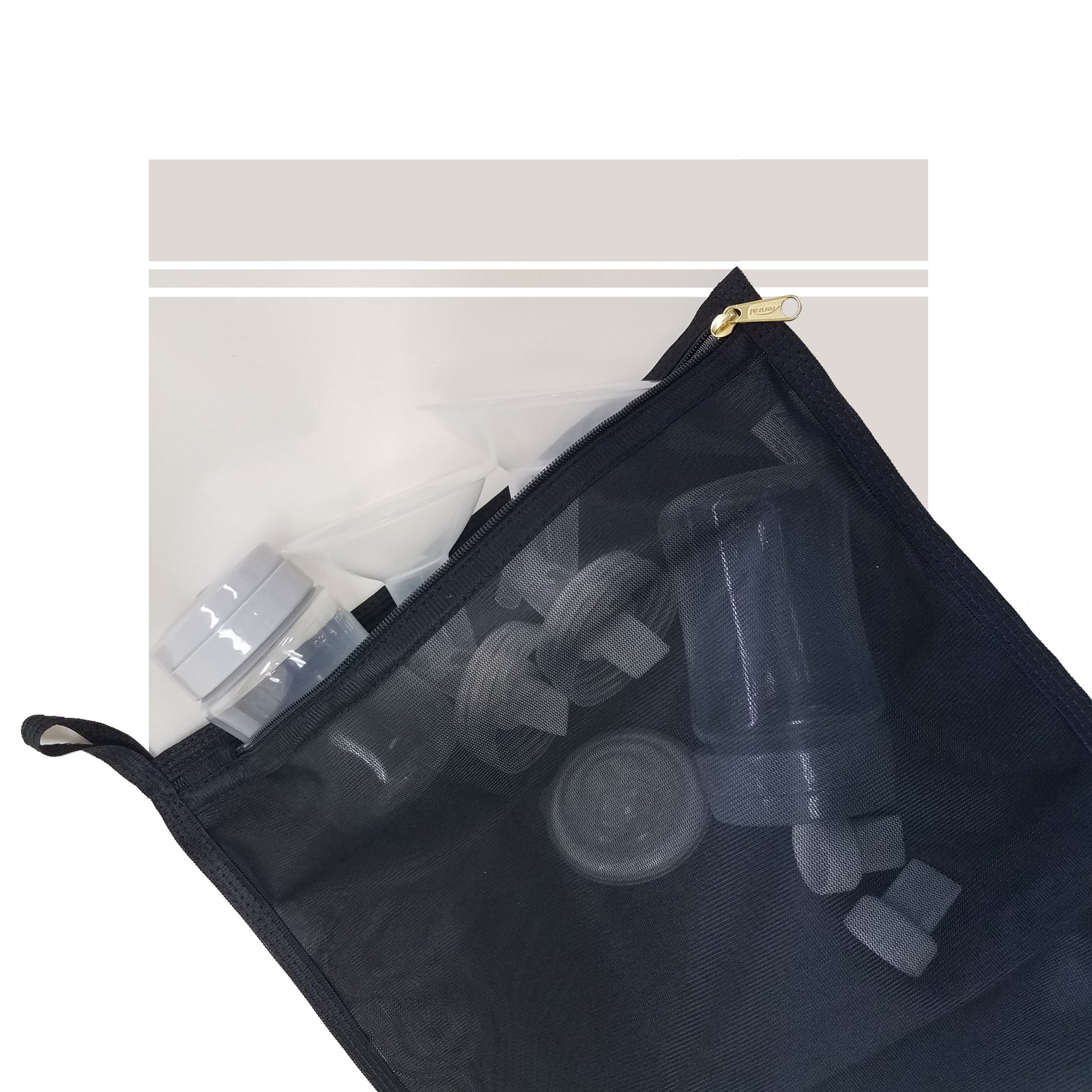
        9.  Our final item on this essential list is a quality air dry bag.  Do not put your parts in a ziplock bag that doesn't breathe.  You are just asking for yeast to grow on your warm moist parts if you do that. Some company make a "dry bag" but that is not the same as an air dry bag that allows air to circulate.

Best wishes for a great start to expressing liquid gold for your precious baby!
Tanya

Thursday, July 28, 2022

Exclusive Pumping: How to Manage Pumping

To initiate milk supply, pump every 2-3 hours with a 5 hour stretch at night for a total of at least 8 times per day of 10-15 minute double pumping sessions.  Many pumping moms get discouraged during the first 3-5 days as it is hard to see much going into the bottles as colostrum comes in teaspoons, not ounces.  Do not let this dissuade you, but draw this liquid gold up in a syringe and give it to the baby as it is chalked full of antibodies.  This schedule goes on for the first six months for the most part, but there are times when normal babies go through growth spurts that you will have to simulate with a pump.  When the baby is 2-3 weeks old and again when the baby is 3 months old, set aside a 5 day period that you will step up the pumping schedule to every 2 hours for a total of at least 11-12 times per day.  This must be 5 days in a row.  If your schedule gets interrupted, start over.   


Having you pump and parts all in one place even if you work from home, is essential.  Getting an easy to carry bag, like a breast pump backpack with built in cooler carrier, means all you have to do is grab some ice packs and go out the door!

In addition to a quality double breast pump a few key accessories will make your life easier.  These include a hands-free pumping bra so that you can multi-task while you are pumping, a breast pump cooler bag for transporting your pump and breast milk, an air dry bag to store and dry your breast pump parts on-the-go, and re-usable sterilizer bags to keep your parts sanitary anywhere you pump that you have access to a microwave.


Treat yourself to extra double pumping collection kits!  You don't have to sterilize your parts every time you use the, but having extras to be drying while you use another set will be a life saver.  Also, to maintain your milk supply, maintain your breast pump which means changing your valves and diaphragm or backflow protector every 6-8 weeks regularly.  This will keep you pump functioning at it's optimal level so your supply does not wain from parts that are not functioning at full suction potential.

Another accessory that might make life easier are these Breastmilk Bandit Tubing Tamers to keep your tubes from hanging down within reach of a toddler or pet and easier to travel with.


And finally, take stock of your storage options.  Many moms prefer to store in breastmilk bottles so they can also use them to feed, but other moms like the convenience and compactness of breast milk storage bags.  If you are choosing bags, a breastmilk storage bag that has a pour spout is handy.  If you are using bottles such as Spectra bottles, Motif Luna Bottles or Avent Classic bottles, make sure to have extra sealing discs.  These tend to get lost down the disposal so having extra bottle sealing discs is a lifesaver!  

Here is to your tenacity in providing your baby this previous gift!

You've got this, mama!
Tanya

Wednesday, July 20, 2022

Breastfeeding Tips and Techniques

Hi Mamas!

I entitled this blog post tips and techniques instead of tips and tricks or breastfeeding hacks because this information was born from 30 years experience in breastfeeding, lactation education and lactation consulting.

So let's get started!

Alternate Breast Massage

This technique is the practice of massaging the breast from the chest wall towards the infant's mouth every time there is a pause in swallowing.  Benefits include keeping the baby alert to allow for faster and more efficient milk transfer as well as more fat content in the milk promoting health weight gain.


Breast Support

Breast support refers to the practice of holding the breast during the feeding.  Typical holds include the C-hold in which the mother cups the breast with her hands in the shape of a C.  It is important that her fingers both above and below the breast are well off the areola so that the infant can achieve a deep latch.  Supporting the breast during the entire feeding helps keeps the infant on task and reduces slipping down into an improper painful latch position.  The infant can feed more efficiently without the burden of supporting the breast which is especially important for younger infants that cannot  yet support the weight of their own head.


Proper Latch

A proper latch also know as a deep latch as opposed to a shallow one is one in which the infant is able to grasp at least 1" of the areola.  The infant's tongue should be down= with lips in a rosebud shape and not tucked under.  A clicking sound should not be heard which may indicate tongue is up.  Mothers should take care to check the underside and can help the infant flare the lips by pulling down gently on the infant's chin.  The benefits of a proper latch include efficient milk transfer and elimination of pain for the mother, as well as reduction of gas in infant as a proper latch reduces swallowing air while feeding.


More tips to come!
Tanya

Friday, December 10, 2021

Insurance Pump Comparison: Choosing the Right Breast Pump

Whether you are choosing a breast pump through your insurance company or to purchase on your own, information is always welcome!  Choosing the right breast pump is so important because it can make the difference in how long you are able to or even choose to pump milk for your breastfed baby.  

Below is a comparison chart to help you with your selection.


As someone who has been in this industry since 1993, we have seen breast pumps and even breast pump companies come and go, but Spectra and Motif seem to be taking the lead.  Both companies have easy access to replacement parts including multiple breast flange sizes.  Both companies also offer compatible breast pump bottles and high quality breast milk storage bags as well.  Spectra also offers a multi-user breast pump for corporate lactation and birthing centers called the Spectra S3 Pro for under $900 which is much better than over a thousand for what was the previously only option in hospital grade breast pumps from Ameda and Medela.  Spectra also offer the only dual control breast pump (not compared above) called the Spectra Synergy Gold Breast Pump which has all the benefits of the Spectra S2 plus independent controls for each breast so you can help coax the lazy breast to increase output more easily. Now Spectra also offer the Spectra Synergy Gold Portable Breast Pump with rechargeable battery for extra convenience!

Due to the difficulty in getting breast pump parts, we do not currently recommend Evenflo, Hygeia or ARDO as your first choice. Due to the inferior motor and systems, we also do not recommend most Medela pumps. For a high quality breast pump with the strength of a good motor and easily obtainable parts, our top recommendations are the Motif Luna, Spectra S1, S2 and SG (Synergy Gold) for professional grade breast pumps and Spectra S3 Pro for Hospital Grade multi-user needs.  Check with your insurance company to get more information on how to obtain your breast pump and bookmark Lactation Connection for your breast pump parts needs as essential parts such as valves and backflow protectors as essential in the suction of your breast pump and must be replaced every 6-8 weeks for optimal performance.

Here's to making good choices!

Tanya


Wednesday, October 27, 2021

16mm 17mm and 19mm Small Breast Shield Size: What To Do When the Smallest Breast Flange is Still too Big!

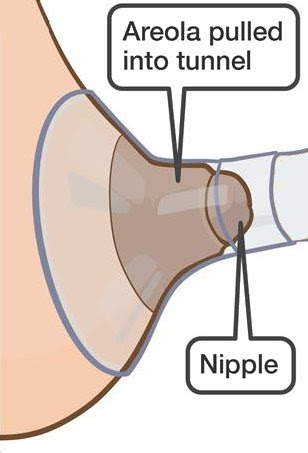
Recently, several moms have contacted us regarding the smallest flange a manufacturer makes still being too big.  Moms are reporting that too much of the areola is being pulled into the tunnel of the breast flange and they are not emptying their breast well when pumping.  


From what I have seen in my twenty-eight years experience in the lactation field, this problem is occurring more and more today than it did in the past.  

One explanation is that there is currently a culture of over-hydrating.  

How can water be bad?  

Of course water is a good thing, but hyperhydration causes lower milk supply by causing the body to excrete more fluids rather than making more milk and it actually changes your skin turgor aka elasticity. This is why these recommendations can help you when the smallest breast flange is still too big.

  1. Reducing water intake to normal “drink to thirst” levels rather than over hydrating with a large number of ounces per day can help reduce the elasticity in your nipples.
  2. Do not use lubricants aka nipple cream or pumping spray on your breast while you are pumping if too much of the areola is being drawn in. While these are normally helpful products, they may cause too much of the areola to be drawn in if your breast flange is too big.
  3. Re-position the breast shield every 3-5 minutes to be slightly off-center.  This will engage more of your milk ducts to help you drain your milk sinuses more effectively.


What do I watch for when reducing my hyperhydration habits?

    1.  Check your urine color. It will be darker than pre-pregnancy even with normal hydration because of the proteins excreted during lactation but if it gets too dark, you are reducing too much.
    2.  Drink to thirst.  You should not be going around why dry mouth or lips.  If you are thirsty, drink water!
    3.  Your skin turgor should return to normal after 3-5 days of changing your drinking habits.  If this does not help your flange fit better, you may need to go with an aftermarket brand that will fit you better.

How do I find a flange that fits me if my pump manufacturer doesn't make one?

If you have a Medela, Hygeia or Lansinoh Breast Pump, Pumpin' Pal offers an x-small silicone flange which fits 15mm 16mm nipple 17mm and 19mm nipple.


If you have a Spectra breast pump, Ameda Mya breast pump  (not Mya Joy) or Motif Luna breast pump, Pumpin' Pal offers an x-small silicone flange with connector for Spectra, Ameda and Motif.  Pumpin' Pal fits nipple sizes 15mm 16mm 17mm and 19mm and works with those pumps perfectly with the Pumpin' Pal Spectra adapter which also works with Ameda Mya and Motif Luna.  


If you have an Ameda pump such as the Platinum, Elite, Purely Yours, Finesse, or Mya JOY that uses the Ameda Hygieinkit  and the 21mm Ameda Flexishield is still too big, you may have felt like you were out of luck.  You can now use the Pumpin' Pal X-Small Flange and other Pumpin' Pal sizes with an Ameda connector for the Ameda breast pumps that use the Ameda Hygienikit.  The Ameda Hygeinikit connector is unique shape that fits the Ameda diaphragm so if your Ameda flange does not have this diaphragm chamber, this is not going to work with your Ameda pump.  In that case, you probably have the Ameda Mya instead of the Mya Joy and you need the connector Mya Adapter.
Otherwise the Pumpin' Pal X-Small with Ameda adapter may be right for you. 


We love to recommend Pumpin' Pal because their flanges have helped so many moms over the years.  So much so, that they were referred to as "supershields", but as with any product not every mother has the same experience.  To get the most out of your silicone supershields, read the Pumpin' Pal Start Guide so that they adhere to your breast for best performance.

So, how should your breast flange fit?

  1. It should be loose enough that the nipple moves back and forth without pain.
  2. It should be tight enough that not much if any of the areola is drawn into the tunnel.
  3. You should not experience redness or discoloration after of the nipple and areola after pumping.
  4. You should not experience blanching (area turning white) where the flange touches.
Another sign that your breast flange aka breast shield is not fitting properly is if you breast do not feel emptied after pumping.  Please note that breast may not feel empty 3-7 days after delivery due to an engorgement period when the breast feel full due to swollen tissue.

Best wishes for a good fit!
Tanya

Thursday, September 16, 2021

Dad's Guide to Bottle-feeding Breastmilk

As our world has changed over the last two years with more parents are working from home and sharing the responsibility of feeding the baby.  My own son is expecting his first and his wife will be working outside the home while he runs his business from home.  

Since babies don't come with an instruction manual, Dads and other caregivers can benefit from some advice on feeding while mom is away.

#1.  Introduce the Bottle at 6-8 Weeks

This time frame is optimal because it allows enough time for mom and baby to establish a good latch and breastfeeding rhythm.  Waiting longer than 6-8 weeks can sometimes make it more difficult for baby to want to transition from breast to bottle.  The goal is to use this window of opportunity so that baby goes back and forth from breast to bottle seamlessly.  

#2.  Choose the Bottle with Intention

The intention behind choosing a bottle is that the nipple had a wide mound so that baby opens wide simulating the same latch as they would on the breast.  The bottle nipple should be silicone and not rubber that has a smell and taste and should be a slow flow or newborn nipple.  Some recommended bottles and nipples are Spectra, Motif Luna, Hygeia and Comotomo.  

#3.  Schedule an Introductory Trial Run

It may be difficult for Dad or any caregiver to try to introduce a bottle with mom is nearby.  Plan a time that mom has a short outing and when it has only been 2 hours since the baby has fed.  Waiting until the three hour mark increases the infant's agitation and willingness to try a new way of feeding.

#4.  Position Baby

Make sure the baby's head is above their body.  Most images you see of bottle feeding have baby in a cradle hold with the bottle above them which can be effective.  When using a cradle hold, the crook of your elbow is lifted so you may want an extra pillow on the armrest so your arm doesn't get fatigued in that position.  If the infant is refusing the bottle in this position, there are several other positions to try.  One is to simulate the position at the breast, hold baby tummy to tummy with you and hold the base of the bottle close to your chest.

#5.  Take it Slow

It is important to slow down the feedings as bottles drip automatically and can cause the infant to feed too quickly getting more air and taking in more breastmilk than mom is producing.  One way to slow the feeding is to stop and burp after each ounce.  

It is important not to offer baby more than the appropriate amount for weight gain or you may undermine moms confidence in her milk production.  So the next question is, how much does the baby need?  To calculate the infant's need, take the baby's weight and multiply by 2.5 which will give you the number of ounces per day. Divide this number by the number or feeding per day which is normally eight.  This will give you the number of ounces per bottle.  But who has time to do math with a new baby in the house so below is a handy chart for you to use.

Once the baby gets used to the bottle, it can be daunting if they finish quickly and still act as if they are hungry.  It is evident a baby over 6 days of age is getting enough by the wet diapers which should be 6-8 per day.  The number of dirty diaper can vary but generally 3-4 per day up to 3 months and then can slow down to one every three to five days. It is also important to know that an infant going through a growth spurt which is typically 3 weeks, 6 weeks, 3 months and 6 months will act hungry and mom may need to increase her pumping schedule for 5 days in a row to boost her supply to match the baby's demand.

#6.  Know How to Handle Breastmilk

As anytime you feed an infant, you will want to wash your hands.  But there is much more to know about how to handle breastmilk when it comes to storage, thawing and feeding.  

Breastmilk is good at room temperature for 4 hours, but if the baby pauses a feeding it needs to be used within a 2 hour window.  It is good in the refrigerator for 4 days, but you should then use it and not freeze it as you have used up the life of the milk.  It is good in a freezer for 6-12 months but you should not store it in the door and you should never re-freeze thawed breastmilk.

When thawing breastmilk, it is best to do this in the refrigerator overnight, on the counter for three hours or in a container of warm, not boiling hot water.  You can also use a commercial bottle warmer provided it has a thermostat reading as breast milk is best served between 77 degrees and 98.6 degrees Fahrenheit for optimal digestion. If you are thawing breastmilk, use the oldest milk first.

Use fresh milk whenever available.  While it seem reasonable for mom to pump and stockpile her freezer, using frozen stock on the first workday of the week is good, but the rest of the week use Monday's expressed milk to serve on Tuesday, etc.  The reasoning behind this is that freshly expressed breastmilk has living white blood cells in it that are no longer living when frozen. Don't get me wrong, frozen milk is still far superior in nutrition and antibodies than artificial infant milk, but the fresh milk is optimal in those while blood cells providing greater active immunities for your baby.  In addition, breastmilk changes over the months so that as the baby grows and the needs of the baby grow, the milk expressed at that time is age appropriate in it's benefits as shown on the infographic below.


#7 Encourage Mom

Expressing breastmilk for baby takes time and commitment.  Remind mom that she is leaving her baby a gift every time she leaves breastmilk for a feeding.  Breastmilk is liquid gold and liquid love for her baby and this provision can help mom in the transition from being home to being away from her precious infant. Another bit of encouragement and boost to milk supply is to pack her bag with a water bottle, nutritious snack or lactation cookie bar. And of course a nice note in her pump bag every now and then never hurts!


Best wishes for Bottle Feeding Breastmilk!

Tanya


P.S.  Feel free to leave questions!


Eufy vs Perifit Wearable Breast Pump